Last updated: October 9, 2026
Published October 9, 2026 · Updated October 9, 2026

You can develop a Mississauga property with an existing mortgage, but in almost every case the mortgage must be discharged, refinanced or postponed before a construction lender will advance funds against the land. The mortgage is rarely what stops a project. The terms written into it, and what your lender is willing to agree to, decide how the project gets financed and in what order.
- An existing mortgage on a Mississauga property does not legally bar development, but most mortgages restrict changes to the property without the lender's consent.
- Construction lenders in Ontario generally expect a first-ranking charge on title, so an existing first mortgage is usually discharged, refinanced or postponed before construction funds flow.
- The planning and approvals stage (official plan, rezoning, site plan) can often proceed while the existing mortgage stays in place, because applications do not change title.
- Prepayment terms in a closed commercial mortgage can shape the timing of a development more than the approvals calendar does.
- Worsley Urban's 2699 Keele Street project in Downsview, Toronto, shows that much of a site's value is created through entitlement and strategy before construction, which is the phase where an existing mortgage matters least.
The Short Answer: Developing a Mississauga Property With an Existing Mortgage
Yes. Owners regularly develop a Mississauga property with an existing mortgage, but the mortgage has to be dealt with before shovels go in the ground. A mortgage is a registered charge on title, and the lender who holds it has rights over what happens to the security, including demolition, new construction and new borrowing.
In practice there are three routes. The existing loan is paid out from construction or partnership financing, it is refinanced with a lender who understands development, or the existing lender agrees to postpone its charge behind a construction loan. Which route works depends on your mortgage terms, your equity in the land and who is carrying the project.
The Full Answer
If you're a Mississauga landowner holding a mortgaged strip plaza, an older industrial building or a surplus parcel and wondering whether the loan blocks a redevelopment, the detail below is for you. It is not written for a homeowner adding a garden suite, where the issues are similar but much smaller in scale.
1. Read the covenants in your mortgage first
Commercial mortgages in Ontario commonly include covenants against demolition, material alteration, change of use and further encumbrances without the lender's written consent. Breaching one can be treated as a default. That is why the mortgage document, not the zoning by-law, is the first thing to read.
Look for the prepayment clause as well. A closed mortgage may carry a prepayment charge if you pay it out early, and on a large commercial loan that charge can affect when it makes sense to start construction. Your lawyer can tell you exactly what your document says.
2. Planning approvals can usually run while the mortgage stays
Filing an official plan amendment, a zoning by-law amendment or a site plan application with the City of Mississauga does not change who holds title or what is charged against it. As a result, the approvals stage often proceeds while the existing loan and the existing tenants stay in place.
This matters because entitlement is where much of a site's value is created. At 2699 Keele Street in Downsview, Worsley Urban carried the site from acquisition strategy through planning and rezoning: City of Toronto staff recommended the zoning by-law amendment in June 2022 and City Council approved it in July 2022 (application 20 159444 NNY 06 OZ). The value there was created through entitlement and development strategy before construction.

Some lenders still want to be told about a rezoning application. Telling them early is usually easier than explaining later.
3. Construction lenders want first position
Construction lending in Canada generally requires the construction lender's charge to rank first on title. Lenders advance funds in draws as work is completed and verified, and they want their security ahead of anyone else's. An existing first mortgage therefore has to move.
The three common ways it moves are compared below.
| Route | What happens to the existing mortgage | Usually fits when |
|---|---|---|
| Discharge | Paid out at the construction loan closing or from partner equity | Prepayment terms are manageable and there is enough equity in the land |
| Refinance | Replaced with land or pre-development financing, later rolled into construction financing | Approvals will take time and the current lender does not lend on development |
| Postponement | Stays registered but ranks behind the construction loan by agreement | The existing lender is willing, which is less common with institutional lenders |
4. Your land equity is your strongest card
Construction lenders typically count the land as part of the owner's equity in a project. If the land is worth well more than the mortgage against it, that surplus can do real work: it can stand in for cash equity the project would otherwise need. A heavily leveraged property leaves less room.
This is also where partnerships come in. A landowner who contributes the land, a capital partner who contributes cash and a developer who brings the ability to execute can structure a deal in which the existing mortgage is retired at the right moment, rather than forcing the owner to find the money alone.
5. Existing tenants and leases are part of the same picture
For an income property such as a neighbourhood plaza, the rent roll often services the existing mortgage. Redevelopment usually means leases must end or be relocated, and income drops while debt remains. Lease expiry dates and any demolition or relocation clauses should be mapped against the mortgage maturity date.
When those three dates line up, approvals, lease expiries and mortgage maturity, the financing step tends to be cleaner. When they collide, the project waits.
Confirm maturity, prepayment terms and any covenants on alteration, demolition or further charges.
List every lease expiry and redevelopment clause beside the mortgage maturity date.
Test what the City of Mississauga's official plan and zoning allow, and what a rezoning might add.
Ask whether it will consent, postpone or prefer to be paid out, and on what timing.
Decide whether to self-develop, partner or sell, with your own legal, tax and financial advice.
6. Who carries the project changes the financing
Construction lenders underwrite the sponsor as much as the site. They look at whether the team has delivered similar buildings, managed budgets and schedules, and handled completion risk. An owner with no development record often finds that bringing in an experienced developer changes the lender's view of the whole package.
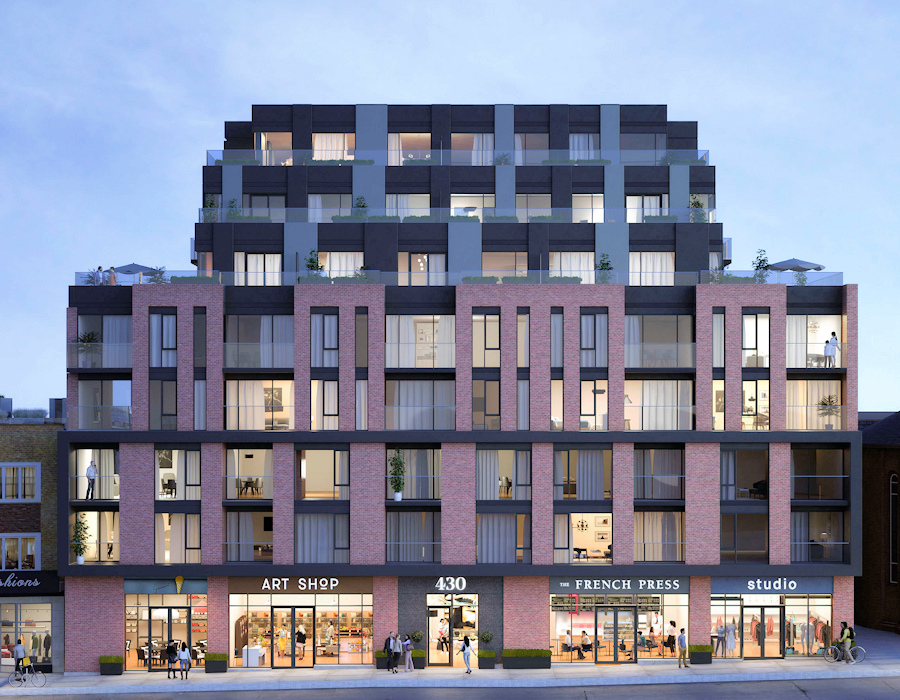
At The Roncy, 422 to 436 Roncesvalles Avenue in Roncesvalles Village, Worsley Urban acted as developer and construction manager, carrying the approvals and the build under one roof. The completed 8-storey building has 93 residential units over retail at grade, on a constrained main-street site whose rezoning was appealed to the Ontario Municipal Board in 2016 and settled.
When the Answer Is Different
The general pattern for developing a mortgaged Mississauga property has exceptions. A few situations change the answer meaningfully.
Small additions within existing permissions. An addition or a new pad building on a commercial site may not need a full construction loan. The existing lender's consent may be all that is required, and some lenders will fund it themselves.
A mortgage near maturity. If the loan renews within the approvals window, the simplest path is often to renew on a short or open term that leaves room to discharge without a prepayment charge. Timing beats negotiation.
A private or vendor-take-back mortgage. Private lenders and former owners holding a vendor-take-back are sometimes more open to postponement than banks, because they may prefer to stay invested. That flexibility usually comes with conditions.
A sale instead of a development. If the owner sells the land to a developer, the mortgage is simply paid from the sale proceeds at closing. Some owners prefer a joint venture to share in the upside; others prefer certainty. Neither is right for everyone, and the choice deserves independent tax and legal advice.
Changing provincial and municipal rules. Ontario's housing legislation, including Bill 23 (More Homes Built Faster Act, 2022) and Bill 185 (Cutting Red Tape, Building Ontario Act, 2024), changed planning timelines and development charges. These rules keep changing and must be confirmed for any specific site with the City of Mississauga and the Province before decisions are made.
Our view
This is opinion, plainly labelled. Owners thinking about developing a Mississauga property with an existing mortgage tend to overweigh the mortgage balance and underweigh the mortgage terms. A modest balance with a punishing prepayment clause can be harder to work around than a larger, open loan.
What matters more is sequence. Approvals, lease expiries and the loan's maturity should be planned together from the start, because entitlement work can add value while the existing financing and income stay put. Small infill projects such as Kew on Kippendavie Avenue in The Beach, a four-storey building approved through the Ontario Municipal Board, show that patient, well-sequenced planning on a sensitive site can succeed.
Finally, the team matters to lenders. A capable sponsor managing budget, schedule and completion risk is often what turns a land position into a financeable project.
Frequently Asked Questions
Do I need lender consent to apply for a rezoning in Mississauga?
Lender consent for a Mississauga rezoning application is not usually a legal requirement, because filing an application does not change title. Some commercial mortgages do require notice of material changes, so check your document and consider telling the lender early.
Can a construction loan sit behind my existing mortgage?
A construction loan behind an existing first mortgage is uncommon in Ontario, since construction lenders generally require first position on title. The usual alternatives are discharging the existing mortgage at closing or having the existing lender sign a postponement agreement.
Can my land count as equity in a development partnership?
Land contributed to a GTA development partnership is commonly treated as the landowner's equity, net of any mortgage registered against it. How it is valued and what the owner receives depends on the partnership terms, which need independent legal and tax advice.
How long do planning approvals take before financing becomes the issue?
Planning approvals in Mississauga and Toronto vary widely by site and application type. At 2699 Keele Street in Toronto, staff recommended the rezoning in June 2022 and Council approved it in July 2022, with site plan following afterward, which shows why financing usually becomes the live issue only once approvals are well advanced.
Sources
- City of Toronto development application records for 2699 Keele Street and Roncesvalles Avenue - City of Toronto Application Information Centre
- Bill 23, More Homes Built Faster Act, 2022 - Legislative Assembly of Ontario
- Bill 185, Cutting Red Tape, Building Ontario Act, 2024 - Legislative Assembly of Ontario
- Mississauga planning applications and zoning - City of Mississauga
Have a similar question? Every opportunity begins with a conversation. If you are a landowner weighing the future of a mortgaged property in Mississauga or elsewhere in the GTA, an investor considering a development opportunity, a lender seeking an experienced sponsor, or a broker with a multi-tenant industrial or neighbourhood commercial deal that fits, reach Worsley Urban at worsley.ca/#contact or dlongo@longocorp.com. The Longo family has been in real estate since 1921, across three generations of building and development in Toronto and Mississauga. Rules and markets change, so take your own legal, tax and financial advice for any specific property.
Worsley Urban
Worsley Urban (worsley.ca) is a Toronto real estate investment and development firm at 3657 Lake Shore Boulevard West, Toronto.
Discuss Your Mortgaged Mississauga Site With Us →