Worsley Urban
Is Multi-Tenant Industrial in the GTA Worth a Private Investor's Attention?
Last updated: October 16, 2026
Multi-tenant industrial real estate investment can deserve a serious investor's attention, because Avison Young reported total GTA industrial vacancy of 2.7% in Q2 2026 even as asking rents eased from their peak. Whether a specific building is worth owning depends far less on the market headline than on the building's specifications, its tenant mix and the quality of the management behind it.
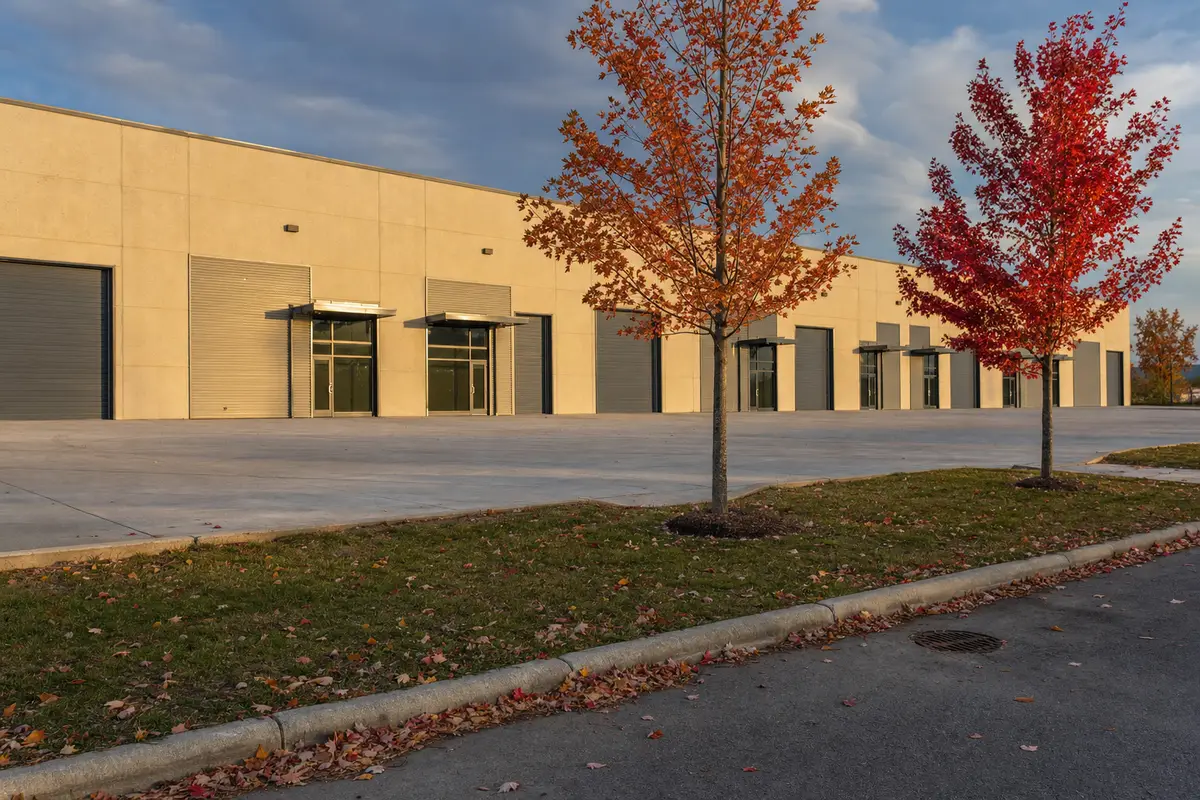
- Avison Young reported GTA industrial total vacancy of 2.7% in Q2 2026, 50 basis points lower than a year earlier.
- Cushman and Wakefield reported Toronto industrial vacancy of 4.9% in Q2 2026, after an eleven-year high of 5.1% at the start of 2026; the two firms measure differently, so the figures should not be compared directly.
- Asking rents in the market were down about 6.3% year over year in Q2 2026 but up 48% over five years, according to Avison Young.
- No current public vacancy figure exists for small-bay (multi-tenant) industrial buildings specifically, so investors must underwrite each building on its own evidence.
- Older industrial buildings with outdated specifications face longer lease-up periods and greater availability, according to Avison Young's Q2 2026 market report.
- Active management (leasing, repositioning, capital improvements and cost discipline) is what separates an industrial holding from a passive bet on the market.
The Short Answer on Multi-Tenant Industrial Real Estate Investment in the GTA
Multi-tenant industrial real estate investment is worth a close look for a patient investor who wants income from many small businesses rather than one large one. Small-bay buildings house the trades, distributors, light manufacturers and service firms that keep Toronto, Mississauga, Vaughan and Markham running. That demand does not disappear when one tenant leaves.
It is not a set-and-forget asset. Rents have eased from their peak, new supply has arrived, and smaller tenants turn over more often than large ones. The opportunity sits with owners who manage actively, buy buildings they can improve, and underwrite each property on its own facts. No property type is risk-free, and industrial is no exception.
The Full Answer: What GTA Small-Bay Industrial Really Involves
If you're a family office in Toronto weighing whether to add industrial to a portfolio heavy in residential or office, the six points below are the ones that decide the answer. Brokers will find the same points useful when judging which deals a hands-on owner wants to see.
1. What multi-tenant (small-bay) industrial actually is
Multi-tenant industrial is a building divided into several units, each leased to a separate business, usually with its own shipping door, a small office front and a warehouse or workshop behind. Owners and brokers often call it small-bay. A single-tenant distribution centre is the opposite: one large user, one lease, one credit to rely on.
The tenants are the working economy. Think of an HVAC contractor, a cabinet maker, a food distributor, an auto parts supplier or an e-commerce seller who has outgrown a garage. Many sit in established employment areas across Toronto, Mississauga and Vaughan, close to the customers they serve.
| Feature | Multi-tenant (small-bay) | Single-tenant large-bay |
|---|---|---|
| Income source | Many small businesses | One user |
| Vacancy risk | Spread across units; partial vacancy common | All-or-nothing when the lease ends |
| Lease terms | Generally shorter, rolling more often | Generally longer |
| Management intensity | High: leasing, repairs, tenant relations | Lower day to day |
| Where value is created | Re-leasing, repositioning, capital improvements | Tenant credit and lease length |
2. Why diversified tenancy and durable demand matter
Diversified tenancy means no single business can empty the building. If a small-bay building has a dozen tenants and one leaves, most of the rent keeps arriving while the owner re-leases one unit. A single-tenant building has no such cushion.
Demand for small units tends to be durable because the users need to be near Toronto's population, highways and customers. A plumbing wholesaler cannot easily move two hours away. That local need is the case for owning this space. It is a case, not a promise.
3. What the Q2 2026 market data says, and what it does not
Avison Young's Industrial Market Report for Q2 2026 put total vacancy at 2.7%, 50 basis points lower than a year earlier. The same report showed asking rents down about 6.3% year over year, yet up 48% over five years. Rents have come off the top without erasing the longer climb.
Cushman and Wakefield's Toronto Industrial MarketBeat for Q2 2026 reported vacancy of 4.9%, down from an eleven-year high of 5.1% at the start of 2026. It also recorded record leasing of 17.6 million square feet in the first half of 2026 and eight consecutive quarters of positive absorption.
Do not set those two vacancy figures side by side. Each firm defines its inventory and measurement differently, and vacancy is not the same measure as availability. More important for this question: there is no current public vacancy figure for small-bay buildings specifically. The market totals are dominated by large distribution space. A small-bay buyer has to build the picture from the building's own rent roll and its immediate submarket.
4. What active management means in practice
Active management of a multi-tenant industrial building is the work of growing net operating income (NOI): the rent collected minus the costs of running the property. Growth comes from four levers, and none of them is waiting for the market.
Renewing good tenants early, filling vacant units quickly and bringing below-market leases to market as they roll.
Reconfiguring unit sizes, refreshing frontages and signage, and changing how the building is marketed so it suits today's tenants.
Roofs, electrical service, lighting, loading doors, paving and accessibility, planned and budgeted rather than patched in a crisis.
Controlling operating costs, recovering what leases allow, and keeping tenants well served so they stay.
Each lever needs a builder's eye as much as a landlord's. Knowing what a roof replacement or a new electrical service involves, and when it pays to do it, is construction knowledge. Worsley's capabilities span leasing, repositioning, capital improvements, budgeting and construction for exactly this reason.
5. Older buildings with outdated specifications
Older industrial buildings are where the risk and the opportunity both sit. Avison Young's Q2 2026 report found that older facilities with outdated specifications are experiencing longer lease-up periods and greater availability. Low clear heights, tight truck courts, limited power and tired office fronts all cost leasing time.
That finding cuts two ways. A passive owner of a dated building may wait longer for tenants. An owner who can price the upgrades correctly, and execute them, may buy a building the market has discounted and bring it back to a competitive standard. The difference is the plan.
6. The risks an honest underwriter names first
Three risks matter most multi-tenant industrial today. First, rents have eased from their peak: Avison Young measured asking rents down about 6.3% year over year in Q2 2026. Second, new supply delivered across the region gives tenants more choice. Third, small tenants turn over more often, and each turnover brings downtime, leasing costs and unit work.
Add interest rates, tariff pressure on trade-exposed tenants and the plain fact that small businesses fail. None of these is a reason to avoid the sector. All of them are reasons to underwrite conservatively and property by property.
When the Answer Is Different for Industrial Investors
The answer on multi-tenant industrial changes for certain investors. This section is for the private investor who needs predictable, hands-off income, not for one comfortable with a building that needs work.
- You need cash out on a fixed date. Industrial property is illiquid. Selling a building takes time, and a forced sale rarely happens on good terms.
- You want no involvement and no operator. Small-bay buildings reward hands-on management. Without it, turnover and deferred repairs erode income.
- The building is functionally obsolete. Some older properties cannot be upgraded economically, and their best future may be redevelopment rather than re-leasing. That becomes a development question.
- The site sits in a changing area. Parts of the market near transit are seeing land-use pressure. Ontario and City of Toronto rules on employment lands and permissions change, and must be confirmed for a specific site.
- The tenancy is concentrated. A "multi-tenant" building where one tenant pays most of the rent behaves like a single-tenant one.
Rules and markets change. Take your own legal, tax and financial advice before investing in any specific property.
Our view
The Longo family entered real estate in 1921, and three generations have built, developed, managed and brokered property in Toronto and Mississauga. Worsley Urban and the Longo Group have delivered commercial and industrial development across Toronto, Mississauga, Markham and Vaughan and have held income properties over the long term. Our view of multi-tenant industrial comes from that ownership perspective, set out on our legacy page.
A quarterly vacancy figure describes a region, not a building. What decides a building's income is the tenant mix, the condition of the roof and services, how leases roll, and whether the owner can execute improvements on budget. Execution is not a slogan. It is approvals, schedules and cost control.
That execution record is public. At 2699 Keele Street in Downsview, Worsley carried a former gas station site from acquisition strategy through rezoning: City Council approved the rezoning in July 2022. On Roncesvalles Avenue, Worsley acted as developer and construction manager for The Roncy, an 8-storey building with 93 residential units and retail at grade, carrying approvals and the build under one roof. Eight Forty at 840 St. Clair Avenue West delivered 116 residential units over 3 retail units. These are mixed-use projects rather than industrial ones, but the discipline of budgeting, approvals and completion is the same one an industrial capital program demands. See them on our projects page.
Frequently Asked Questions
Is there a vacancy rate for small-bay industrial specifically?
A small-bay industrial vacancy rate is not currently published by public sources. Reports such as Avison Young's and Cushman and Wakefield's Q2 2026 industrial reports cover the whole market, which large distribution buildings dominate. Small-bay buildings need to be judged on their own rent roll and submarket.
Why do Avison Young and Cushman and Wakefield report different vacancy figures?
Avison Young and Cushman and Wakefield measure vacancy with different inventories and methods, so their Q2 2026 figures (2.7% and 4.9%) are not directly comparable. Each is useful for tracking direction within its own series over time. Vacancy and availability are also different measures and should never be mixed.
Are older industrial buildings in Toronto a poor investment?
Older industrial buildings in Toronto face longer lease-up periods and greater availability, according to Avison Young's Q2 2026 report. They are not automatically poor investments, since a building bought with a realistic upgrade plan can be repositioned. Without capital and management, though, the risk is real.
How does a broker bring a multi-tenant industrial deal to Worsley?
Brokers with a multi-tenant industrial or neighbourhood commercial deal that fits Worsley's investment focus are invited to bring it early. Contact Worsley Urban through worsley.ca or at dlongo@longocorp.com. More reading is on the Worsley insights page.
Sources
- Total vacancy, asking rent trend and older-building lease-up findings, Q2 2026 - Avison Young, Industrial Market Report Q2 2026
- Toronto vacancy, H1 2026 leasing volume and absorption trend - Cushman and Wakefield, Toronto Industrial MarketBeat Q2 2026
- Worsley Urban history, focus and projects - Worsley Urban
Have a similar question about multi-tenant industrial real estate investment? Every opportunity begins with a conversation. If you are an investor or family office considering an investment or development opportunity, speak privately with Worsley Urban about investing alongside us property by property, with clear terms and no blind pool. Read how partnerships are shaped on our working together page, then reach us at worsley.ca/#contact or dlongo@longocorp.com.
Worsley Urban
Worsley Urban (worsley.ca) is a Toronto real estate investment and development firm at 3657 Lake Shore Boulevard West, Toronto.
Discuss a GTA Multi-Tenant Industrial Opportunity →