Worsley Urban
What Can a Private Investor Know About the Properties Before Committing Capital?
Last updated: November 2, 2026
In blind pool fund vs property by property real estate investing, the deciding difference is timing. A deal-by-deal investor can review the specific building, its rent roll, its leases and its business plan before signing. A blind pool investor commits capital first and learns what was bought afterwards. Neither route wins in every case. Property by property suits investors who want to judge each asset and have the time to do it. A blind pool fund suits investors who want broad diversification and would rather delegate selection to a manager.
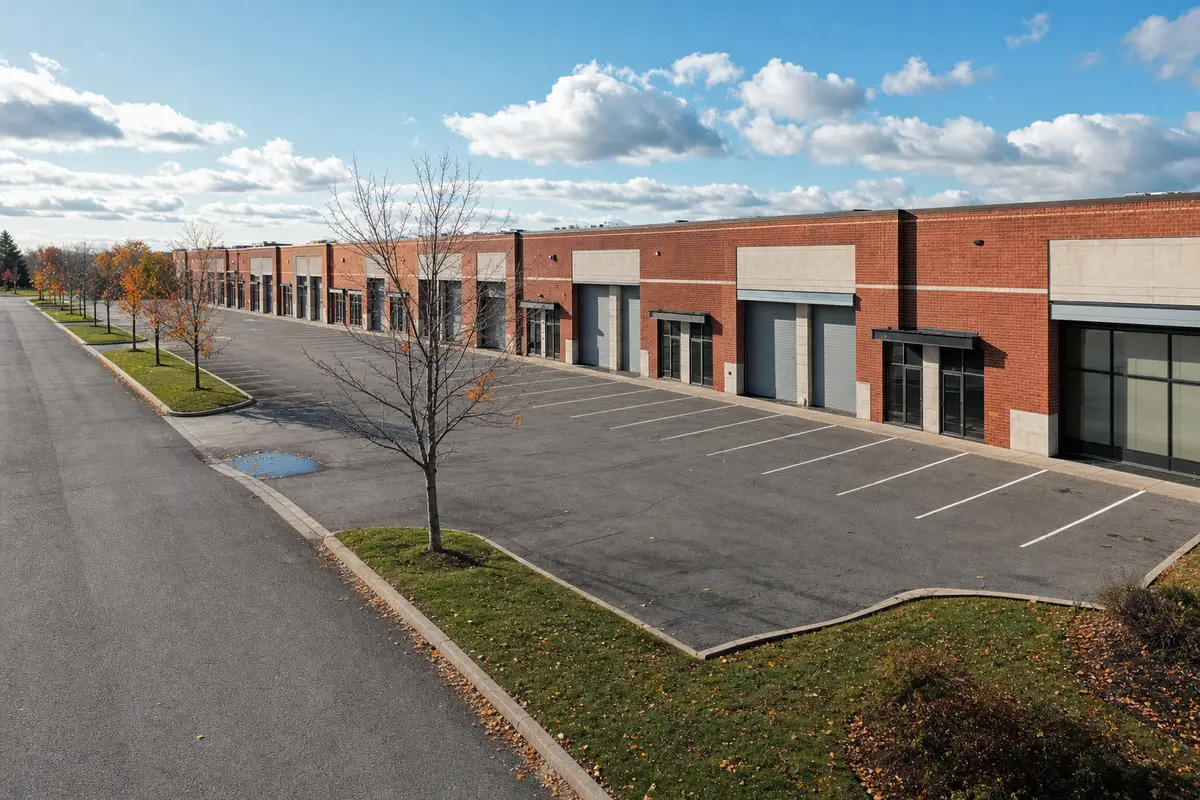
- In a property by property (deal-by-deal) investment, the investor sees the actual property, its tenants and its plan before committing any capital.
- In a blind pool fund, investors commit capital before the properties are identified, so the decision rests on the manager's record, strategy and fund terms.
- The Ontario Securities Commission investor education site, updated October 24, 2025, warns that in the exempt market "you could lose your entire investment" and that private investments are generally illiquid with less disclosure than public markets.
- S&P Global data reported by IFC Review on April 21, 2026 found that family office direct investments rose 123.3% in 2025, with greater control, reduced fees and better valuations cited as drivers.
- Worsley Urban invests alongside private capital property by property, with clear terms and disciplined underwriting, and does not operate a blind pool.
Blind Pool Fund vs Property by Property Investing: The Side-by-Side Comparison
The blind pool versus deal-by-deal choice comes down to eight practical attributes. The table sets them out in plain terms. Fees are described in words only, because structures vary widely and must be read in each offering's own documents.
| Attribute | Property by property, alongside a sponsor | Blind pool fund |
|---|---|---|
| What you see before committing | The specific property: address, leases, tenant mix, building condition, financing plan and business plan | The manager's track record, target strategy, investment criteria and fund documents; not the assets |
| Control and consent | You decide yes or no on each deal; major-decision consent rights can be negotiated per property | The manager selects and manages assets within the mandate; investor input usually runs through an advisory committee, if any |
| Diversification | Concentrated; built up one deal at a time | Spread across several properties from one commitment |
| Alignment of interests | Tied to the outcome of one known property; sponsor co-investment is visible deal by deal | Tied to the whole portfolio; strong assets can mask weak ones |
| Fees (in words) | Usually charged on deployed capital in a specific deal, set out in that deal's terms | Often include management fees on committed capital, sometimes before money is invested, plus performance-based fees |
| Reporting | Property-level: leasing, capital work, budget against actual | Portfolio-level, often aggregated, with valuations set by the manager |
| Liquidity | Illiquid; exit is tied to the property's sale or refinancing | Illiquid; exit tied to the fund term, with limited or no redemption |
| Investor workload | High: diligence, legal review and a decision on every deal | Front-loaded: one round of diligence on the manager, then low |
Property by Property Investing Alongside an Operating Sponsor
Property by property investing means each opportunity is presented separately, with its own terms, and the investor chooses whether to take part. The investor is not judging a promise. They are judging a building.
The strengths are concrete. A family office can read the leases for a multi-tenant industrial building, check lease expiry dates against the business plan, walk the roof and loading areas, and test whether the sponsor's leasing assumptions match what comparable space in the area is doing. For a neighbourhood commercial plaza, the investor can see which tenants are necessity and service retail and how dependent the centre is on any single one.
Control is the second strength. Consent rights over refinancing, sale, major capital spending or changes to the business plan can be negotiated for each deal. The IFC Review report on S&P Global data (April 21, 2026) names greater control as one of the reasons family office direct investments rose 123.3% in 2025.
The weaknesses are just as real. One property is a concentrated position: a major tenant leaving affects everything. Diligence takes time and professional cost on every deal. And the investor who passes on three deals to wait for the right fourth one holds idle capital in the meantime.
Blind Pool Real Estate Funds: Strengths and Weaknesses
A blind pool real estate fund raises commitments from investors before the properties are identified, then the manager draws that capital down as it acquires assets within a stated mandate. The investor's diligence is on the manager, not the buildings.
The strengths are fair and worth stating plainly. One commitment can spread exposure across several properties, tenants and sometimes submarkets. Established managers often have deal flow and purchasing scale that an individual investor cannot reach. For an investor without staff to review leases and building reports, delegating selection is a sensible choice, not a lazy one.
The weaknesses follow from the structure. The investor cannot decline an individual acquisition they dislike. Fees may begin on committed capital before it is deployed. Reporting is usually aggregated, and valuations of private assets between sales are estimates prepared by or for the manager, which is why how a fund values its assets deserves careful questions. The Ontario Securities Commission's investor education page (updated October 24, 2025) notes that exempt market investments typically come with less disclosure than public offerings and may be hard to sell.
Listed alternatives such as REITs solve the liquidity problem but bring public market price swings, and they are a different decision again.
What a Private Investor Can Verify Before Committing to a Specific Property
A specific property offers public evidence that a blind commitment cannot. In Toronto, development applications are recorded with application numbers, staff reports and Council decisions that anyone can look up. That record is checkable.
Worsley's own projects show what that looks like. At 2699 Keele Street in Downsview, a former gas station site beside Highway 401, City of Toronto staff recommended the Zoning By-law amendment in June 2022 and City Council approved the rezoning in July 2022 (applications 20 159444 NNY 06 OZ and 21 249733 NNY 06 SA), for a mixed-use condominium of more than 400 residences over grade-level retail. The value there was created through entitlement and development strategy before construction. An investor looking at a site like that can trace each approval step rather than take it on faith.
The same applies to completed work. Eight Forty, at 840 St. Clair Avenue West, is an 8-storey building with 116 residential units and 3 retail units (application 22 112796 STE 12 CD). The Roncy, at 422 to 436 Roncesvalles Avenue, is an 8-storey building with 93 residential units and retail at grade, delivered after a 2016 Ontario Municipal Board appeal was settled, with Worsley acting as developer and construction manager. A sponsor's record of execution can be checked against these public files.
A practical checklist for any single-property offering:
Check expiry dates, renewal options and who pays for what against the business plan.
Roofs, parking areas and mechanical systems drive capital spending in industrial and retail buildings.
For any redevelopment angle, confirm current zoning and application history with the municipality; rules change and must be checked for each site.
Consent rights, reporting, fees and exit mechanics belong in writing, reviewed by your own legal, tax and financial advisers.
When to Choose a Blind Pool Fund or a Deal-by-Deal Investment
If you're a family office in Toronto with an in-house team that already reviews operating businesses, and you want to know exactly which industrial unit or plaza your capital sits in, the answer leans one way. If you're a private investor with no time for lease reviews, it leans the other.
- Choose property by property when you want to approve each asset, negotiate consent rights, see property-level reporting and you have advisers to review each deal.
- Choose property by property when you already hold a diversified portfolio and want targeted exposure, for example to multi-tenant industrial or neighbourhood retail serving established communities.
- Choose a blind pool fund when broad diversification from one commitment matters more than choosing assets.
- Choose a blind pool fund when you lack the time or staff for repeated diligence and are comfortable judging a manager instead of buildings.
Our Verdict
For the question in the title, property by property investing wins clearly: it is the only route in which the investor knows the property before committing. That is a structural fact, not a sales claim.
For overall fit, the answer depends on the investor. Family offices and experienced private investors who value control, can absorb concentration and will do the work are well matched to deal-by-deal co-investment with an operating sponsor. Investors who want diversification and delegation are often better served by a well-run fund. Worsley Urban works only the first way: select acquisitions alongside aligned private capital, each standing on its own merits, never inside a blind pool.
Either route can lose money. Nothing here is personal advice; markets and rules change, and a reader should take their own legal, tax and financial advice for a specific property.
Our view
This is opinion. Investors comparing blind pool funds with deal-by-deal investing tend to overweight the headline projection and underweight the sponsor's ability to execute. A projection is an assumption. A rezoning approved by Council, or a building completed and occupied, is a record.
What matters most is whether the sponsor manages the property after closing: leasing, capital improvements, budgets and schedules. Totem Condominiums at 17 Dundonald Street, an 18-storey tower beside Wellesley station that included a secondary station entrance, and Kew on Kippendavie Avenue in The Beach, approved through the Ontario Municipal Board, both depended on execution through difficult approvals. The Longo family has been in Toronto real estate since 1921, and that long-term ownership view is the lens behind this opinion.
Frequently Asked Questions
What is a blind pool real estate fund?
A blind pool real estate fund collects investor commitments before its properties are identified, then the manager buys assets within a stated mandate over the fund's investment period. Investors judge the manager, strategy and fund documents rather than specific buildings.
Is deal-by-deal investing less risky than a fund?
Deal-by-deal investing is not automatically less risky: it offers more visibility but less diversification, since one property carries the whole position. The Ontario Securities Commission's page updated October 24, 2025 warns that in private investments you could lose your entire investment.
Why are family offices moving toward direct investment?
Family office direct investments rose 123.3% in 2025, according to S&P Global data reported by IFC Review on April 21, 2026. The drivers named were greater control, reduced fees and better valuations.
Can I sell my interest in a private real estate investment early?
Private real estate interests, whether in a single property or a blind pool fund, are generally illiquid, and early sale is often restricted or impossible. Exit usually comes through a property sale, refinancing or the end of a fund term, so read the transfer terms with your own advisers before committing.
Sources
- Exempt market risks, illiquidity and lower disclosure (updated Oct 24, 2025) - Ontario Securities Commission, GetSmarterAboutMoney.ca
- Family office direct investments rose 123.3% in 2025 (Apr 21, 2026) - IFC Review, reporting S&P Global data
- Worsley Urban projects and approach - Worsley Urban
Every opportunity begins with a conversation. If you are an investor or family office considering an investment or development opportunity in the GTA, and you want to see the property before you commit, speak with Worsley Urban privately at worsley.ca/#contact or dlongo@longocorp.com. Property by property, clear terms, no blind pool.
Worsley Urban
Worsley Urban (worsley.ca) is a Toronto real estate investment and development firm at 3657 Lake Shore Boulevard West, Toronto.
Discuss a Property-by-Property Co-Investment, No Blind Pool →