Worsley Urban
Toronto
Selling Your Toronto Land to a Developer or Partnering on It: How the Two Paths Compare
Last updated: October 12, 2026
Whether to partner with a developer or sell my land to a developer in Toronto depends on one question: who should carry the rezoning, approvals and construction risk, and therefore who keeps the value those steps create. An outright sale pays the owner soonest and ends their involvement. A joint venture or limited partnership keeps the owner in the project until completion. A long-term ground lease, which typically runs 50 to 99 years, keeps ownership of the land in the family and turns it into a long stream of rent. There is no universal winner. The right path depends on the owner's time horizon, appetite for risk and need for liquidity.
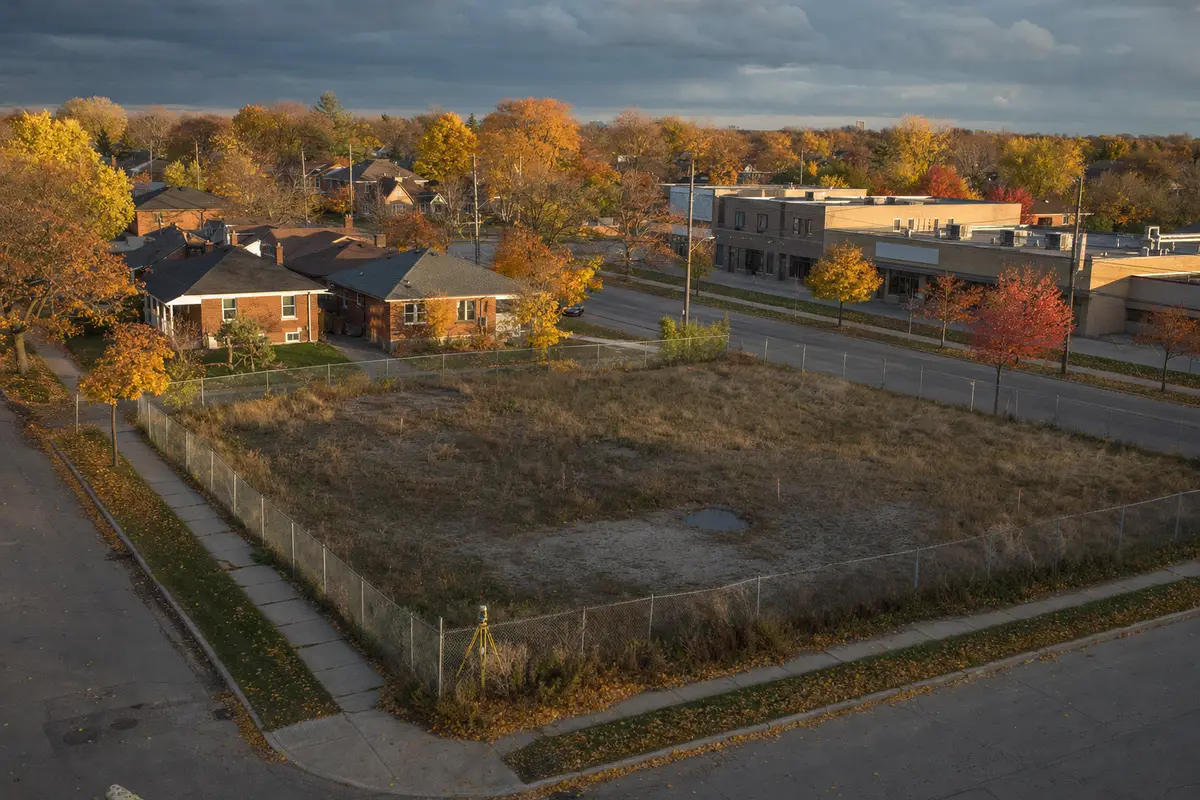
- An outright sale pays a Toronto landowner at closing and transfers all entitlement and construction risk to the buyer, along with most of the value created by rezoning.
- A sale conditional on rezoning lets the owner share in entitlement value, but closing waits on City of Toronto approvals that can take years and may be appealed.
- According to Miller Thomson (February 10, 2026), the limited partnership is the most common Canadian real estate joint venture structure, and land can be contributed to an LP, partnership or JV corporation on a tax-deferred basis, but not to a co-ownership.
- The Appraisal Institute of Canada, Canadian Property Valuation (2012) notes that ground leases typically run 50 to 99 years, and a minimum term of about 40 years helps the tenant secure financing.
- At 2699 Keele Street in Downsview, City Council approved the rezoning in July 2022, showing how much of a site's value is created through entitlement before any construction begins.
Partner With a Developer or Sell Your Land to a Developer in Toronto: The Three Paths Side by Side
A Toronto landowner deciding between selling to a developer and partnering with one is really choosing among three structures: a sale, a joint venture or limited partnership, and a ground lease. Each one divides control, timing and risk differently. The table below compares them on the attributes that matter most.
| Attribute | Outright sale (incl. conditional on rezoning) | Joint venture / limited partnership | Long-term ground lease |
|---|---|---|---|
| Owner's control | Ends at closing | Shared, defined by the partnership agreement | Keeps title; tenant controls the building for the term |
| Time involved | Months for a clean sale; years if conditional on rezoning | Through planning, approvals, construction and completion | Typically 50 to 99 years (AIC) |
| Entitlement risk carried by | Buyer (shared in timing if conditional) | The partnership, so the owner shares it | Tenant |
| Construction risk carried by | Buyer | The partnership, led by the developer | Tenant |
| When the owner is paid | At closing | Mostly at sale, refinancing or completion | Rent over the term, with periodic resets |
| Share of entitlement value | Little (clean) to partial (conditional) | Participates through the partnership | Indirect, through rent set on the land's use |
| Best fit | Owners who need liquidity or a clean exit | Patient owners who want to share in the value created | Families planning across generations |
None of these columns describes a specific deal. Terms vary by site, by partner and by market, and a landowner should take their own legal, tax and financial advice for a specific property.
Why Entitlement Is Where Much of a Toronto Site's Value Is Made
Entitlement is the process of securing the rezoning, official plan amendments and site plan approval that allow a new building on a piece of land. In Toronto, a parcel zoned for a gas station and the same parcel approved for a mid-rise or tower are different assets. The dirt is identical. The permissions are not.
2699 Keele Street in Downsview shows this clearly. Worsley Urban acted as developer and development manager, carrying a former gas station site beside Highway 401 from acquisition strategy through planning and rezoning. City of Toronto staff recommended the Zoning By-law amendment in June 2022, and City Council approved the rezoning in July 2022. The site plan application has a Notice of Approval Conditions issued (City applications 20 159444 NNY 06 OZ and 21 249733 NNY 06 SA). The approved project is a mixed-use condominium of more than 400 residences over grade-level retail on Keele Street.
That value was created through entitlement and development strategy before construction. This is why the choice of path matters so much. An owner who sells before rezoning hands that step, and most of its value, to the buyer. An owner who partners stays in for it, along with its risks.
Entitlement is not a formality. The Roncy at 422 to 436 Roncesvalles Avenue had its rezoning appealed to the Ontario Municipal Board in 2016 before the matter was settled, and Kew on Kippendavie Avenue in The Beach was approved through the Ontario Municipal Board. Provincial rules on planning, appeals and development charges have changed repeatedly in recent years through legislation such as Bill 23 and Bill 185, and the current rules must be confirmed with the City of Toronto and the Province for any specific site.
Path One: Selling Your Toronto Land to a Developer Outright
An outright sale of Toronto land to a developer is the simplest path. The owner receives the purchase price at closing, and the buyer takes on rezoning, financing, construction and leasing or sales. Control ends on the closing date.
The strength is certainty. A clean sale suits an estate that must be settled, an owner who needs capital for another purpose, or a family that simply does not want a multi-year project. The weakness is price. A buyer pricing unentitled land must account for approval risk, appeal risk and the years of carrying cost ahead, so the owner is paid for the land as it is, not as it could be.
The conditional sale: a middle step
A sale conditional on rezoning lets the buyer pursue approvals before closing, often paying more because the risk is lower when they close. The owner shares in entitlement value but waits. Deals can stall. If approval fails or is appealed, the condition may not be met and the land returns to the market years later.
The owner must decide how long the condition can run, what extensions are allowed, who controls the application, and what happens to studies and drawings if the deal ends. These are legal questions. Get them reviewed.
Path Two: Partnering With a Developer Through a Joint Venture or Limited Partnership
A joint venture with a Toronto developer lets a landowner contribute the land and stay invested through planning, approvals, construction and completion. The developer contributes the ability to execute, and often brings or arranges the additional capital. Each party is rewarded for what it brings.
Structure matters. Miller Thomson's February 10, 2026 analysis, What developers and investors often miss in Canadian real estate joint ventures, identifies the limited partnership as the most common structure and notes that land can be contributed to an LP, partnership or JV corporation on a tax-deferred basis, but not to a co-ownership. For a family that has held land for decades, that distinction can be significant, and it must be confirmed by the owner's own tax advisers.
The weakness is time and shared risk. The owner is paid mostly at the end, when units are sold, the asset is refinanced or the property is sold. If approvals are delayed or costs rise, the partnership absorbs it. The owner must decide on governance: who makes which decisions, how additional capital calls work, how disputes are resolved and how a partner exits.
The partner's record is the main variable. The Roncy on Roncesvalles Avenue, an 8-storey mixed-use building with 93 residential units and retail at grade plus townhomes on Howard Park Avenue, was delivered by Worsley as developer and construction manager, carrying the approvals and the build under one roof. That combination reduces the hand-offs where schedule and budget risk tend to sit. More on how Worsley structures these arrangements is on the partnerships page.
Path Three: A Long-Term Ground Lease on Toronto Land
A ground lease lets a Toronto landowner keep title while a tenant builds and operates on the land for a long term. According to the Appraisal Institute of Canada's article on ground lease rent resets, ground leases typically run 50 to 99 years, and a minimum of about 40 years helps the tenant finance a building.
The strength is continuity. The family keeps the land, receives rent, and the tenant carries entitlement and construction risk. At the end of the term, depending on the lease, the improvements may revert to the owner.
The weakness is complexity over decades. The AIC article focuses on rent reset clauses, and for good reason: how rent is recalculated at each reset, whether on land value, on the land's current use or on another basis, shapes the owner's income for generations. Lenders also look closely at the term remaining, so a lease that is too short or too restrictive may never get built. Ground leases are less common for small residential infill sites and more natural where a tenant wants a long-term operating asset. The owner must decide on term, reset method, permitted uses and end-of-term reversion. Each needs legal and valuation advice.
When to Choose Which Path for Your GTA Property
- Choose an outright sale when the owner needs liquidity soon, the estate must be settled, or no one in the family wants a multi-year commitment.
- Choose a sale conditional on rezoning when the owner can wait through the City of Toronto approval process and wants a better price, but does not want construction exposure.
- Choose a joint venture or limited partnership when the owner is patient, wants to share in entitlement and development value, and can accept that payment comes mostly at completion.
- Choose a ground lease when the family wants to keep the land across generations and prefers long-term rent to a single payment.
If you own a main-street site in Roncesvalles Village or along St. Clair West, a former service station near a highway in Downsview, or an older commercial building in Mississauga, Markham or Vaughan that no longer earns its keep, the answer depends less on the land than on your family's timeline. Two owners with identical lots can rightly choose opposite paths.
Context shapes risk too. Eight Forty at 840 St. Clair Avenue West, an 8-storey mixed-use building with 116 residential units and 3 retail units (City application 22 112796 STE 12 CD), sits on a transit-served corridor. Totem Condominiums at 17 Dundonald Street, an 18-storey tower beside Wellesley subway station, includes a secondary entrance to the station in its approved design. Transit proximity, neighbourhood character and street scale all affect how far entitlement can go on a given site.
Our Verdict on Selling or Partnering With a Toronto Developer
For a Toronto landowner who needs certainty or cash soon, an outright sale wins, and there is nothing wrong with taking it. For a patient owner with a site whose value depends on rezoning, a well-structured joint venture or limited partnership with an experienced developer is usually the stronger fit, because it lets the owner participate in the value entitlement creates. For a family thinking in generations, a ground lease deserves a serious look.
The worst outcome is choosing by default. An owner who sells unentitled land without understanding what approvals could add, or who partners without understanding the governance, is deciding blind. None of these paths is guaranteed, and no structure removes market or approval risk.
Our View
The Longo family entered real estate in 1921, and Dino Longo brings more than four decades across ownership, investment, development and construction. For a landowner, who will actually carry the project can matter more than the headline number: a partner's ability to manage budgets, schedules and approvals shapes the outcome more than the split on paper.
The practical first step is to understand what your land could be before deciding what to do with it. Get an honest evaluation of the planning context, then compare the paths. You bring the property; we bring the path to its value. Our completed and approved projects and development capabilities show the kind of work involved, and more background is on our legacy page and in our insights.
FAQ: Partnering With or Selling to a Toronto Developer
Should I rezone my Toronto land before selling it?
Rezoning Toronto land before selling can increase its value, because entitlement is where much of a site's value is created, as the July 2022 Council approval at 2699 Keele Street illustrates. It also means spending time and money on applications that may be appealed. A sale conditional on rezoning or a partnership with a developer lets an owner share that work rather than carry it alone.
Can I contribute land to a joint venture without paying tax right away?
Contributing land to a joint venture can be tax-deferred in Canada: Miller Thomson's February 10, 2026 article notes land can be contributed to an LP, partnership or JV corporation on a tax-deferred basis, but not to a co-ownership. Whether that applies to your property depends on your circumstances. Take your own tax and legal advice before signing anything.
How long does a ground lease in Ontario usually last?
Ground lease terms typically run 50 to 99 years, according to the Appraisal Institute of Canada, which also notes that a minimum of about 40 years helps a tenant finance construction. Rent reset clauses over that term deserve careful legal and valuation review.
What should I ask a developer before partnering on my land?
Developers seeking a partnership on your land should show approved and completed projects, such as City of Toronto applications you can look up yourself. Ask who leads entitlement and construction, how decisions and capital calls work, and how either side can exit. Insist on clear terms property by property, not participation in a blind pool.
Sources
- Limited partnership as the most common JV structure; tax-deferred land contribution to an LP, partnership or JV corporation but not a co-ownership (February 10, 2026) - Miller Thomson
- Ground lease terms of 50 to 99 years; about 40 years minimum to support financing; rent reset issues - Appraisal Institute of Canada, Canadian Property Valuation (2012)
- Development application records for the projects named above - City of Toronto Application Information Centre
Every opportunity begins with a conversation. If you are a landowner evaluating the future of a property in Toronto or the GTA, start a private conversation with Worsley Urban through our contact page or at dlongo@longocorp.com. You bring the property; Worsley brings the path to its value.
Worsley Urban
Worsley Urban (worsley.ca) is a Toronto real estate investment and development firm at 3657 Lake Shore Boulevard West, Toronto.
Discuss Selling or Partnering on Your Toronto Land →